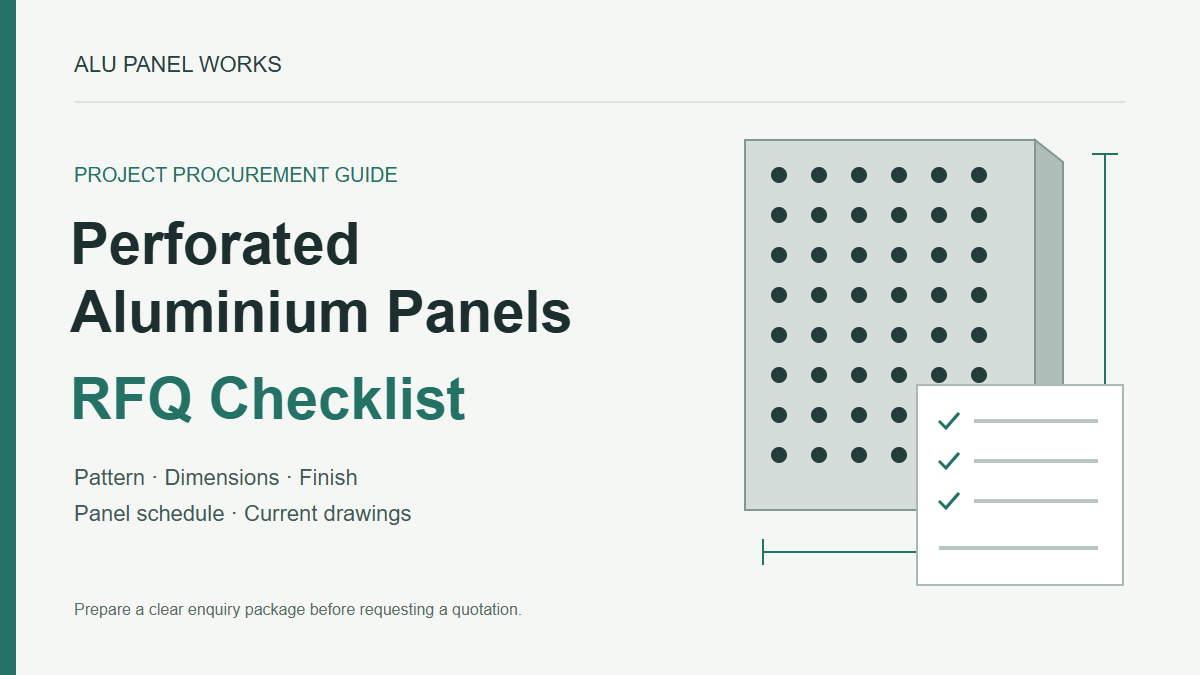
For a perforated aluminium panel quotation, send the panel dimensions, perforation pattern, specified material and finish, quantities, current drawings and delivery requirements. Identify the panels and components you want priced, and ask suppliers to list any assumptions or exclusions.
An RFQ, or request for quotation, gives each supplier the same requirements to price. Use this checklist to assemble your enquiry for a project in the UAE or Saudi Arabia. Include approved requirements and mark outstanding decisions as “to be confirmed” so a preliminary quotation can be distinguished from a fully specified order.
1. Identify the project and quotation scope
Start with the project name, country, city and intended application. State whether the enquiry covers panel supply only or also requests separately identified items such as fixings, supporting components, samples, packing or delivery.
Include the quotation deadline, target delivery date and any phased delivery requirements. Describe dates as project requirements and ask the supplier to confirm a proposed schedule. Name the person who can answer drawing and specification questions.
For an overview of the product and its design considerations, see our perforated aluminium panel page.
2. Define the perforation pattern
Attach a dimensioned pattern drawing where available and record the following details.
- Hole shape and size, including slot dimensions where relevant.
- Hole pitch, stating how spacing is measured.
- A straight, staggered or project-specific hole arrangement.
- Required open area, if specified by the project team.
- Pattern direction and the face from which it should be viewed.
- Unperforated borders, local solid areas and panel identification marks.
If the pattern must continue across adjacent panels, show the panel sequence, joint positions and alignment on an elevation. Mark any mirrored or rotated panels. A reference photograph can communicate the appearance, but keep it separate from the drawing used to define dimensions.
Where open area or a pattern detail is undecided, request clarification or an identified option. Do not present a visual preference as an approved technical requirement.
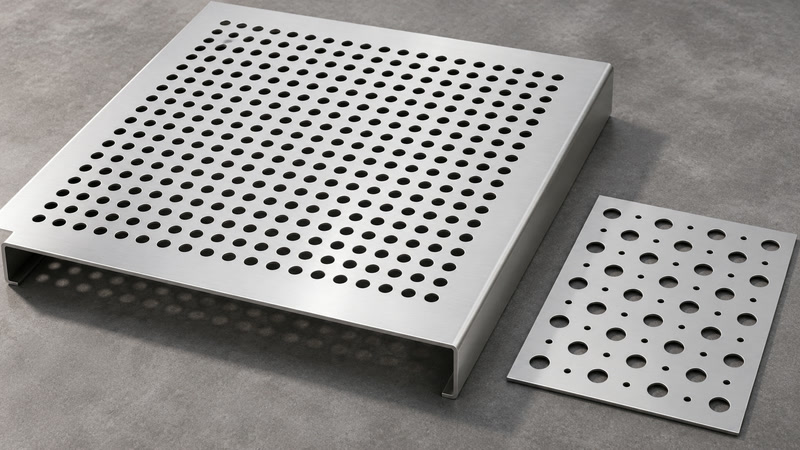
3. Distinguish material, flat dimensions and formed dimensions
State the material grade and thickness from the approved project specification. If these have not been selected, record that status and identify who will approve them. Keep supplier suggestions separate from the specified base quotation.
For each panel type, provide its reference, quantity, finished face dimensions and overall formed dimensions. Where a flat blank drawing is available, label it clearly so it cannot be confused with the finished panel size.
Show return depths, folded edges, corners, cut-outs and other formed details. For curved panels, attach the approved geometry and indicate the required orientation. Include the project’s dimensional tolerances or ask which details need agreement before quotation. Do not infer a supplier’s forming limits from an illustration.
4. Show solid fixing zones, joints and backing
Mark the areas that must remain solid for the proposed fixing detail. Include fixing positions, edge details and the joint arrangement shown in the project drawings. Identify which components are included in the panel enquiry and which are supplied by others.
If a backing layer or another visible surface is part of the design, describe it and clarify whether it belongs in the quoted scope. Include relevant sections as well as elevations. For wider questions about panel layout and interfaces, use the aluminium cladding design guide.
5. Attach finish and performance requirements
Provide the specified finish, colour reference, gloss or texture requirement and the surfaces to be finished. Identify any approved sample, sample reference or mock-up requirement. Keep a screen image labelled as a visual reference unless a physical sample or specification defines the acceptance criteria.
Where the project requires performance evidence, attach the relevant specification clauses. State the required standard, evidence scope and review process rather than requesting a general claim of “compliance”. Ask the supplier to identify which documents it can submit for the proposed product or assembly. Record any unresolved requirement for the project team’s review.
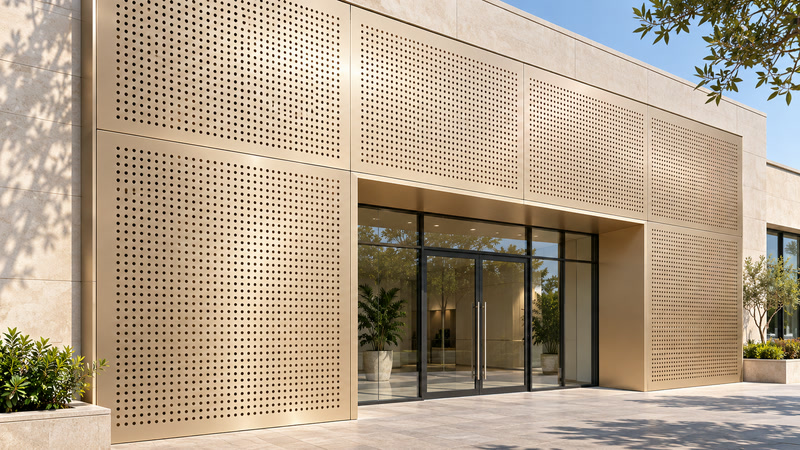
6. Issue one coordinated drawing and quantity package
Prepare a panel schedule that connects each panel reference to its dimensions, pattern, finish and quantity. Separate distinct panel types and identify any requested spare panels. If quantities are preliminary, say so and provide the basis used for the enquiry.
Add a document register listing drawing numbers, revisions, issue dates and status. Make clear which files govern the quotation. If you update the package during tendering, identify the changed documents and ask suppliers to acknowledge the revision used in their response.
7. Make delivery and commercial boundaries explicit
Specify the requested delivery location and whether the enquiry is based on collection, delivery to a named destination or another proposed arrangement. Ask the quotation to state its delivery basis and identify responsibility for transport, customs handling, unloading and site handling where relevant.
Include project requirements for packing, panel labels and delivery sequence. Ask suppliers to show exclusions, quotation validity, payment terms and proposed lead time in their response. Treat these as items to confirm against the submitted scope.
RFQ package checklist
Use the table to check your enquiry before sending it. Put your project values in a separate schedule or cover sheet, reference the supporting files and identify any information still awaiting approval.
| RFQ field | What to provide |
|---|---|
| Project / country / city | Project name, country, city and application location. |
| Application and quoted scope | Intended use and the panels or components to include. |
| Panel references and quantities | A panel schedule with a quantity against each reference. |
| Material grade and thickness | The approved specification, or a clearly identified pending decision. |
| Flat and finished dimensions | Drawing references that distinguish the flat blank from the formed panel. |
| Folds, returns, curves and cut-outs | Relevant sections, profiles and detail drawings. |
| Hole shape, size, pitch and layout | The dimensioned pattern drawing and spacing convention. |
| Open area requirement | The project requirement or a note that it awaits confirmation. |
| Solid borders and fixing zones | Details identifying where the panel must remain unperforated. |
| Pattern direction across panels | The elevation, panel sequence and orientation. |
| Joints, backing and supporting items | Detail references and who supplies each component. |
| Finish and sample requirements | The finish specification and any approved sample reference. |
| Performance evidence requested | Project clauses and the documents required for review. |
| Drawings and specification revisions | A document register with current revision numbers. |
| Quotation deadline / required delivery | Required dates and any phased delivery requirements. |
| Delivery location and logistics scope | The named destination and requested delivery basis. |
| Technical contact / open questions | The contact for clarifications and a list of outstanding decisions. |
Frequently asked questions
Can I request a quotation before every detail is approved?
Yes. Label preliminary information and list outstanding decisions. Ask for the quotation’s assumptions and the information needed before an order can be confirmed.
Is a reference image enough to define the pattern?
Use it to explain the intended appearance. Add dimensions, pattern layout, borders and orientation, or flag these as unresolved inputs requiring discussion.
What should I check when comparing quotations?
Check the drawing revision, quantities, material, pattern, finish, included components and delivery basis. For example, if one quotation includes fixings and another excludes them, ask both suppliers to price the same scope before comparing totals.
Once your package is assembled, submit a project enquiry describing the location, application, estimated quantity and target schedule. Mention that drawings are available and ask how to share the files with the team. Include the questions that still need agreement.